
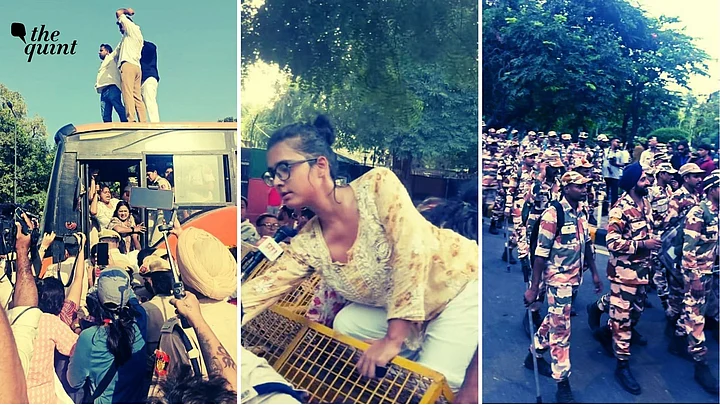
The true test of a police force is not how effectively it can control a crowd, but how confidently a citizen can stand before it without fear.
There are images that ought to stop a democracy in its tracks—women being manhandled in public; uniformed personnel appearing to wield authority with unrestrained aggression; and vigilantes seemingly taking the law into their own hands while those entrusted with enforcing it appear accommodating, indifferent, or unwilling to intervene.
If the visuals surrounding recent protests in Delhi bear out these concerns, they are not merely instances of questionable crowd management. They expose a deeper crisis of constitutional trust.
Delhi Police is no ordinary police force. It operates in the national capital, home to Parliament, the Supreme Court, foreign diplomatic missions, the national media, and the institutions through which India presents itself to the world.
The capital is both the seat of power and the most visible theatre of democratic dissent. What happens on its streets is therefore never entirely local. It becomes a statement about the Republic itself.